

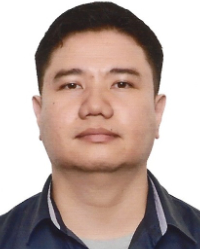
 The Theology and Ministry Program of the School of Humanities invites you to the oral defense of the M.A. Thesis entitled “Responding to Vatican II’s Call for Fully Conscious and Active Participation in Liturgy in Light of Maximus the Confessor’s Theories of Participation and of Christ’s Two Wills” by PAUL CLEMENT H. HOW on 7 October 2025, Tuesday, 2:00-3:30 p.m. at the Tipanan ni San Ignacio, DLC 201, 2/F Dela Costa Bldg., Loyola School of Theology. The Board of Examiners is composed of Fr. Emmanuel Marfori, S.Th.D. (Adviser), Fr. Oliver Dy, S.J., S.T.D., Ph.D. (Second Reader/Principal Examiner), Fr. Arnel Aquino, S.J., S.T.D., and Fr. Peter Knox, S.J., S.T.L., Ph.D. The defense is being held in partial fulfillment of the requirements for the degree Master of Arts in Theological Studies with a field of specialization in Systematic Theology. It is open to the public.
Abstract: Since Vatican II, the Church has called on the faithful to practice a “fully conscious, and active participation” in the liturgy. Throughout Church history as well, there has been an understanding of the concept of participation in the divine that developed primarily during the Early Byzantine era (4th-9th Century).
This paper explores the connection and overlap between the two differing senses of the word ‘participation,’ with the thought of St. Maximus the Confessor (580-662) best exemplifying Byzantine participation (methexis), whose emphasis on divine activity (energeia) explains how human beings become more like God or divinized while still preserving their human nature. Maximus also defended the doctrine of Christ’s divine and human wills, a theory that not only affirms Jesus’ human will, but takes his surrender to the Father’s divine will as an example for all humans.
Contemporary liturgical participation, on the other hand, emphasizes a deepened understanding of the paschal mystery, as well as the laity’s role in Christ’s Mystical Body and the specific cultures engaged in worship.
By studying fully conscious and active liturgical participation in light of Maximus’ teachings on participation and the will, it is found that Maximus’ theology is tied to his ascetic practice, with his writings on this instructive as to the necessary internal disposition of the faithful when celebrating the liturgy. One’s willed self-offering is the means by which humans participate in God and are ultimately divinized. Each individual offers something different and unique to Christ’s Body, with Maximus’ ecclesiology affirming the union of each in a way that transcends differences, through Christ as Logos or ordering principle of the world.


