


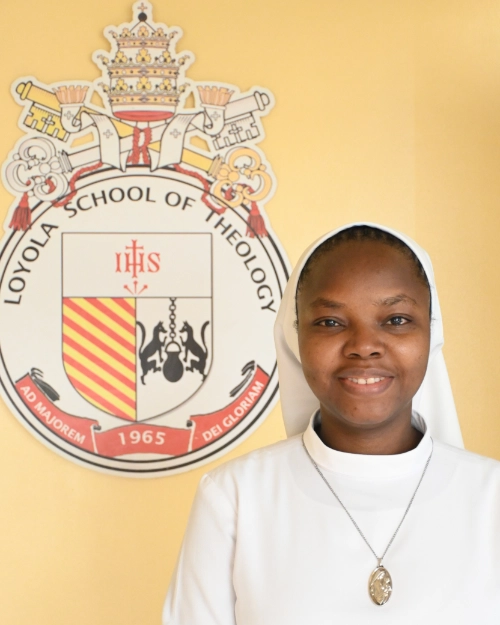
 The Theology and Ministry Program of the School of Humanities invites you to the oral defense of the M.A. Thesis entitled “THE INTERNALLY DISPLACED PERSONS IN FADA N’GOURMA DIOCESE, BURKINA FASO: A Study on Human Dignity in the Light of Catholic Social Teaching” by Sr. WENDPOUIRÉ AMÉLINE KABORE, F.D.N.S.C. on 26 March 2026, Thursday, 3:00-4:30 p.m. at DLC 104 (Ollado Room), G/F Dela Costa Bldg., Loyola School of Theology. The Board of Examiners is composed of Fr. Abundio Babor, Jr., M.S.C., S.T.D. (Adviser), Fr. Eric Marcelo Genilo, S.J., S.T.D. (Second Reader/Principal Examiner), Fr. Peter Knox, S.J., S.T.L., Ph.D. (joining online via Zoom), and Emmanuel de Guzman, Ph.D. The defense is being held in partial fulfillment of the requirements for the degree Master of Arts in Theological Studies with a field of specialization in Moral Theology. It is open to the public.
Abstract: The outbreak of terrorism in Burkina Faso, which began in 2026, has dramatically escalated, with the country becoming the world’s epicenter for terrorist attacks in 2023 and 2024. The Diocese of Fada N’Gourma is one of the areas most vulnerable to such attacks, resulting in a significant number of internally displaced persons (IDPs) who face serious challenges to their basic dignity within the host community. This study aims to investigate the lived experiences of these IDPs and to examine the Church’s responses through the lens of Catholic Social Teaching (CST).
Grounded in the concept of dignity articulated in Dignitas Infinita, this thesis analyzes the struggles faced by IDPs and the interventions of the local Church. The research employs the “See-Judge-Act” methodology, a guiding framework of CST, to explore the daily challenges that IDPs endure in their quest for dignity and how the Church fulfills its mission of Christian witness.
The findings reveal instances of discrimination and neglect experienced by IDPs within their host communities, highlighting the moral imperative to address these issues of dignity. This study addresses the gap in theological reflection concerning internal displacement in the region and its wider implications for migration. By applying CST, the research underscores the inherent dignity of IDPs and offers theological insights and pastoral directives to enhance the Church’s interventions. It also emphasizes the unique nature of the Church’s humanitarian aid, which is faith-based and free from proselytism and political ideologies.


