


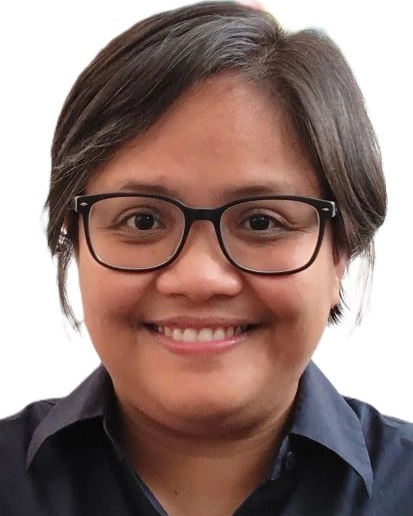
 The Theology and Ministry Program of the School of Humanities and the Loyola School of Theology invite you to the oral defense of the Ph.D. Dissertation entitled “WOMEN DEACONS WEAVE ANEW: A Decolonial Feminist Sacramental Reimagination of the Diaconate” by MARNIE D. RACAZA on 13 April 2026, Monday, 3:00-5:00 p.m. at DLC 201 (Tipanan ni San Ignacio), 2/F Dela Costa Bldg., Loyola School of Theology. The Board of Examiners is composed of Rachel Joyce Marie Sanchez, Ph.D. (Adviser), Fr. Arnel Aquino, S.J., S.T.D. (Second Reader/Principal Examiner), Fr. Emmanuel Marfori, S.Th.D., Jessica Joy Candelario, Ph.D., and Fr. Marcel Uwineza, S.J., Ph.D. The defense is being held in partial fulfillment of the requirements of the civil degree Doctor of Philosophy in Theology concentrating in the field of Systematic Theology. It is open to the public.
Abstract: Despite the numerous scriptural, historical, and traditional evidence of the existence of women deacons, supported by theological assertions that legitimize women’s ordination to the diaconate, the ministry remains available and accessible only to baptized men in the Catholic Church today.
This study contributes to the ongoing conversation and discernment about women’s access to the diaconate by arguing that a decolonial feminist sacramental reimagination of the diaconate affirms the ordination of women as deacons and deepens it into a ministry of service ordered toward the flourishing of all.
Using the five principles of doing a decolonial feminist sacramental theologizing rooted in decolonial feminism, feminist sacramental theology, and contextual feminist theologies in the Philippines and Latin America (multiplicitous selfhood, active and resistant subjectivity, historical memories and indigenous/local spiritualities, deep solidarity and coalition of equals at the B/borderlands, and fullness of life or flourishing of all creation), the ministry of the diaconate is reconstructed and woven anew with its foundational and constitutive threads: (1) that women, in their multiplicitous selfhood, are images or icons of Christ whose diakonia is shaped and sustained not by his maleness and masculinity but with his radical love and deep solidarity with the poor, marginalized, and oppressed; (2) that women are active subjects of their faith, capable of defining and living out their diaconal vocations as participation and contribution in making present the Reign of God; (3) the histories and memories of God’s manifestations in the lives, spiritualities, and traditions of women, indigenous communities, and other historically subjugated groups and peoples; (4) the just ordering of relationships, the shared exercise of power and authority, and the nurturing the ecclesial communities through a discipleship of equals; and (5) service oriented towards the well-being and flourishing of all creation—both human and the more-than-human natural world.
Through this decolonial feminist sacramental reimagination of the diaconate, the Church relevantly lives out its call to be the fundamental sacrament of Christ in a world grappling with complex conditions and challenges.


