


“Critical efforts in human formation are towards self-integration through a gradual process of achieving interior freedom. Self-integrating ministers are interiorly free, comfortable with their actual self that they realize is a configuration of their gifts and imperfections. Neither in denial nor disheartened by these imperfections, they are able to face, own, and address them”.
Father Provincial Primitivo Viray, SJ, Father President Jose Quilongquilong, SJ, Members of the Board of Trustees of Loyola School of Theology, dear Members of the Administration and Faculty, dear Graduating Students, Ladies and Gentlemen: Good Evening.
Today marks the completion of your academic formation. The seminarians among you have fulfilled the required theological formation for those aspiring to be a priest. You who are professed religious brothers and sisters have gained solid theological foundation, enriching the way you do ministry. Those among you who are lay persons: your faith lives have been now strengthened by theological understanding, while you who are ordained ministers on your second or third cycle of theological schooling now possess the needed credentials that qualify you to be on the teaching staff of ecclesiastical institutes.
Your academic formation has come to a close. Congratulations to you all.
I gathered that the reason why I was chosen to address you today is because of the many years I have spent doing formation work. Yes, I have been engaged in the ministry of formation for 38 years, in the work of human formation.
In Pope John Paul II’s apostolic exhortation Pastores Dabo Vobis released in 1992, human formation was, at long last, categorically described as indispensable in the preparation of church ministers. The document states that human formation is fundamental and is the underpinning for other dimensions of formation: human formation is foundational to the spiritual, pastoral, and intellectual aspects of formation. The minister, after all, is first and foremost a human being and remains a human being. Moreover, ministry is directed to fellow human beings, and, thus, the minister will be effective only to the extent that the minister’s humanity serves as a bridge and not an obstacle between God and people.
At Emmaus Center for Psycho-spiritual Formation, we had been doing the work of human formation since 1981, eleven years ahead of Pastores Dabo Vobis. We accompany candidates to priesthood and religious life on the path to human maturity.
The journey to human maturity is primarily about coming to terms with our being human. Many of us are not at home with our being human or with this or that aspect of our humanness. Many of us take flight from being human. Some of us leave out our feelings and live in our thoughts alone. Feelings can be confusing, overwhelming, and unmanageable and so, we would rather leave them out or set them aside. But ministers who are alienated from their feelings will not develop empathy and compassion, essential qualities in doing ministry, in helping people experience God’s love for them.
We might also tend to screen out what is negative in our personhood. We overlook our limitations. We seek comfort in our idealized self; however, living in the idealized self blinds us to our weaknesses. It acknowledges only the good qualities we desire to possess. In our idealized self, we deceive ourselves into believing that we already embody these aspired-for, pleasing qualities. However, unacknowledged and therefore unaddressed frailties do not go away and it is only a matter of time before they undermine an otherwise excellent ministry.
Jean Vanier, a recently deceased Canadian, Catholic philosopher and theologian, founder of L’Arche, an international federation of communities for people with developmental disabilities and those who assist them, is on point when he said: “We don’t know what to do with our own weakness except to hide it or pretend it doesn’t exist. So, how can we welcome fully the weakness of another if we haven’t welcomed our own weakness?”
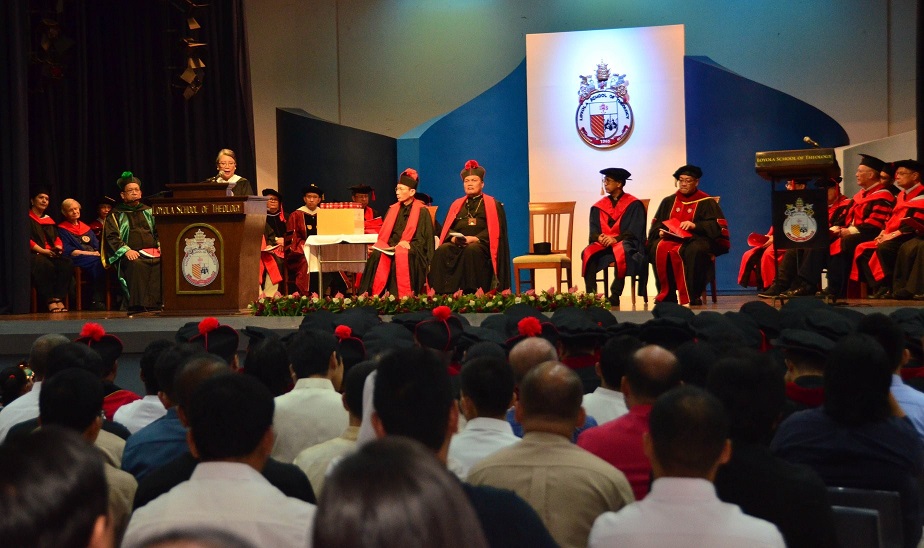
We also ignore our hurtful experiences. We gloss over them or minimize their impact and thus, move on in life, unhealed. But consequences of unhealed experiences are passed on to others. An online article entitled Intergenerational Transmission of Trauma: An Introduction for the Clinician by psychiatrist Charles Portney asserts that a parent suffering from trauma has difficulty modeling a healthy sense of identity and autonomy, appropriate coping mechanisms, and maintaining a balanced perspective in the face of life challenges. The parent’s high levels of anxiety can significantly interfere with the child’s developmental progress.
So, critical efforts in human formation are towards self-integration through a gradual process of achieving interior freedom. Self-integrating ministers are interiorly free, comfortable with their actual self that they realize is a configuration of their gifts and imperfections. Neither in denial nor disheartened by these imperfections, they are able to face, own, and address them.
They can be their genuine self, freed from the illusion of the idealized self. At home with their frailties, with no illusions about being perfect persons, they are not self-protective in the face of disparagement. They can remain issue-focused instead of being sidetracked by face-saving efforts with no need to preserve a veneer of faultlessness. Self-possessed with inner strength, they are more likely to show a strong heart when facing the escalating attacks on the Church – its places of worship, its leaders and its people.
At Emmaus Center, we recognize our calling to use our gifts in the service of psycho-spiritual formation in the Church: to facilitate the healing from varied forms of psycho-emotional unfreedom and the reclaiming of human dignity, thereby fostering integrity that manifests in compassionate relations with self and others. This process predisposes one to be open to share more fully in God’s life and work in our world.
The First Principle and Foundation found at the beginning of the Spiritual Exercises of St. Ignatius of Loyola articulates St Ignatius’ view of who God is, what it means to be human, and what ought to be the relationship between God and human beings. Fr. Joseph Tetlow, S.J., who once served as the Jesuit General’s delegate for Ignatian Spirituality, has four articles I use to introduce retreatants to the First Principle and Foundation. I have synthesized his main ideas in these articles into brief statements:
To be human is to be created.
To be human is to live with givens.
To be human is to have limited control.
To be human is to be dependent.
To be human is to be vulnerable.
To be human is to live with these disturbing realities.
Nonetheless, to be human is also a wonderful reality:
To be human is to be desired into being by God.
To be human is to be created out of love, to love and be loved.
To be human is to be gifted with talents/abilities and with the freedom to choose.
When I use my gifts and freedom properly, I come closer to God’s hopes and dreams for me. God’s hope is that I become the person he had hoped me to be, my best self.
I am my best self when I am most loving, most life-giving. When I do not put to use, when I misuse or abuse my gifts and freedom, I wreak havoc on my self and God’s other creations.
To be human is to have choices. The choices I make bring me closer to God or away from God. God continues to create me through the choices I make.
Interiorly free ministers are self-transcending. Freed from self-consciousness, they are able to put their own needs aside to serve something greater than themselves. Their focus is no longer themselves and their concerns but some higher goal outside and beyond themselves. Akin to self-transcendence is self-forgetfulness. I am not referring to memory impairment or dementia here but rather that quality of “having or showing no thought of self or selfish interest,” (Merriam-Webster.com, 2019) or no regard for own advantages but only for the welfare of others (Thefreedictionary.com, 2019).
These ministers will not think twice about putting their lives on the line for the people they serve.
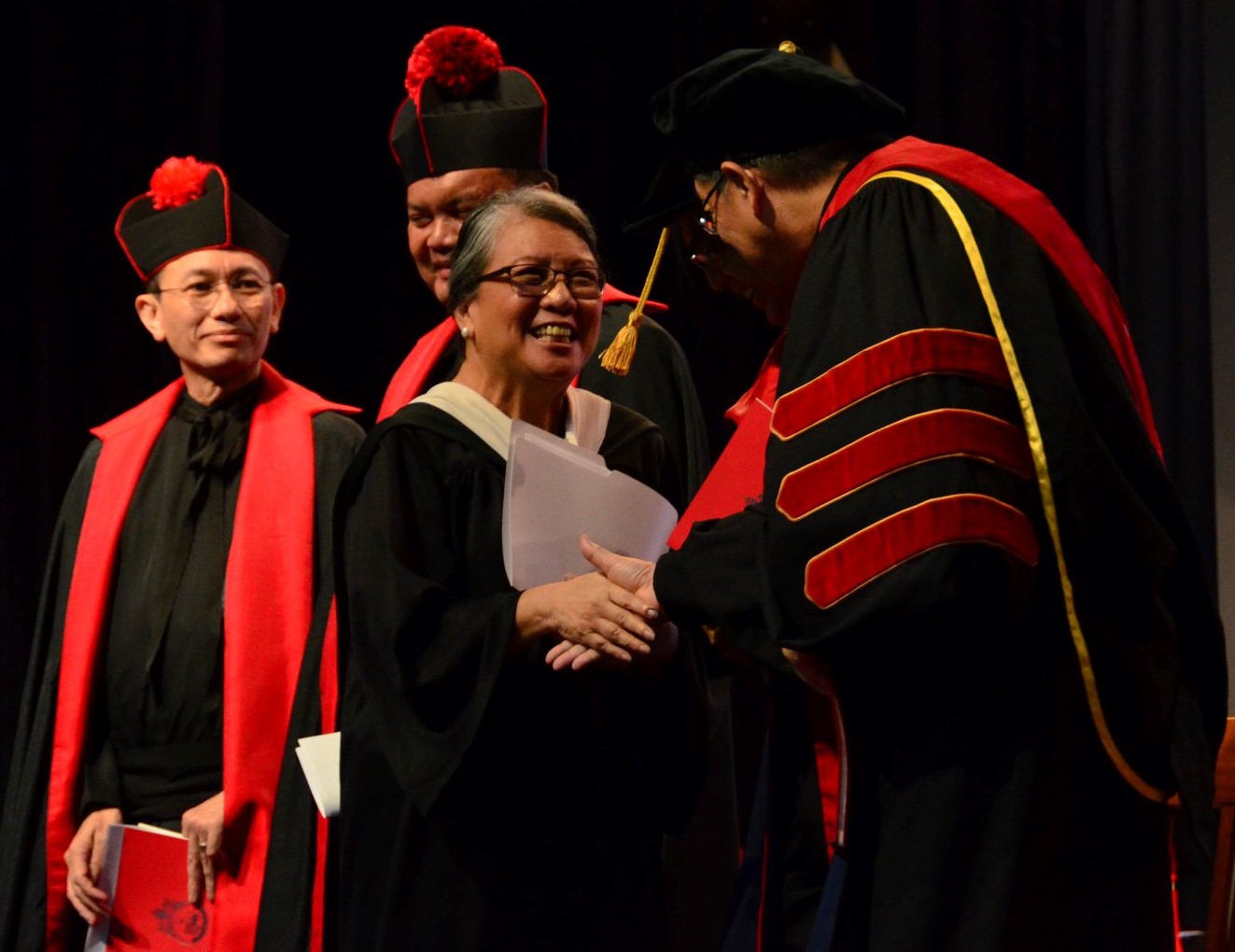
Dear Graduates, I am aware that I stand before future church leaders: future pastors, school directors, formators, superiors, even bishops. The growth to human maturity is not an easy process. The embracing of a less-than-perfect self requires a compassionate yet challenging space. Only those who have experienced having the totality of themselves received and accepted unconditionally can offer such growth-promoting and safe, reverent environments to others.
Your sports festival shirt this year says: Formed by love, Formed to love. What a compliment to LST! You have described and proclaimed the ambience within which your theological formation took place. In the future you may or may not be part of a human formation team but this is the essence of the work of human formation: You love people to interior freedom. You love them unto love. Because this is the way of our Lord! This is the call and challenge: With interior freedom, may we love others unto love. May we be formed by love and formed to love!
Thank you very much and, once again, congratulations, dear Graduates.
References
John Paul II, P. (1992). Pastores dabo vobis: Apostolic Exhortation on the Formation of Priests in the Circumstances of the Present Day. New Jersey: Hunter Publishing.
Portney, C. (2003, April 1). Intergenerational transmission of trauma: An introduction for the clinician. Psychiatric Times. Retrieved from https://www.psychiatrictimes.com
Self-forgetful. (2019). Merriam-Webster. Retrieved May 11, 2019 from https://www.merriam-webster.com/dictionary/self-forgetful
Self-forgetful. (2019). The Free Dictionary. Retrieved May 11, 2019 from https://www.thefreedictionary.com/self-forgetfulness


